
Medical Dermatology
Understanding redness before treating it.
Rosacea is not one condition. Flushing, persistent redness, bumps and thickened skin respond to different treatments, so the first step is identifying what kind of rosacea you have.
Overview
Understanding rosacea
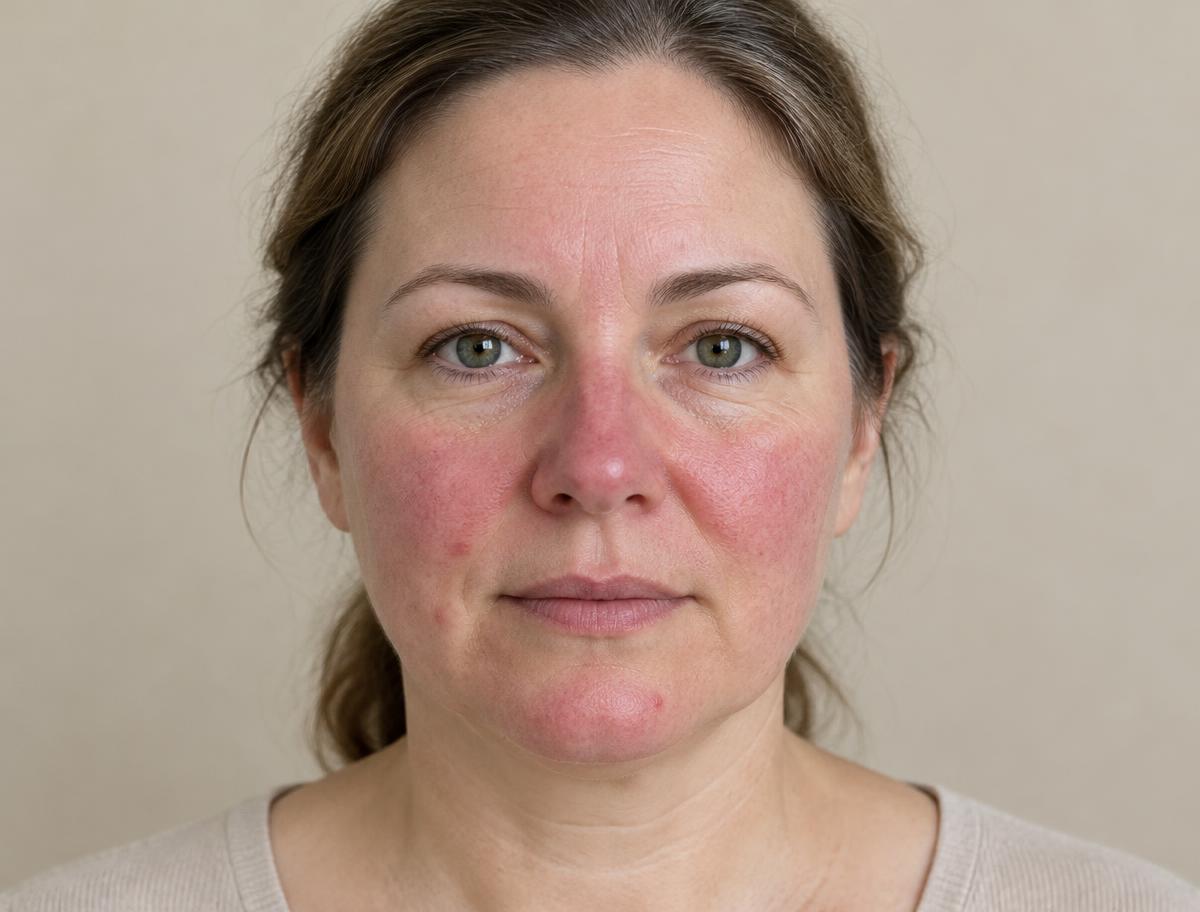
Rosacea is a chronic inflammatory condition of facial skin involving blood vessels, the skin's barrier and its immune response. It typically affects the central face — cheeks, nose, chin and forehead — and can also involve the eyes.
Some people mainly flush and stay red, with visible small vessels. Others develop inflammatory papules and pustules that resemble acne. A smaller number develop thickening of the skin of the nose. Many have a combination.
Rosacea is not caused by poor hygiene or by drinking, although alcohol can be a trigger. Sun exposure, heat, cold wind, spicy food, stress and some skincare products are common aggravators — and at elevation, in the Black Hills, sun and wind matter a great deal.
Signs
What you might notice
- Flushing that comes and goes, then persistent central facial redness
- Small visible blood vessels across the cheeks and nose
- Acne-like bumps and pustules without blackheads
- Burning, stinging or sensitivity to ordinary skincare
- Dry, gritty or irritated eyes and inflamed eyelid margins
- Thickening of the skin of the nose over time
Care
How we treat it
Topical prescriptions. Anti-inflammatory topicals such as metronidazole, azelaic acid and ivermectin, and vasoconstricting topicals for temporary redness reduction.
Oral medication. Low-dose anti-inflammatory doxycycline and, in selected cases, other oral therapies.
Light-based treatment. BBL and other light and laser treatments can reduce background redness and visible vessels. These are generally cosmetic services rather than covered benefits.
Barrier and sun strategy. Gentle cleansing, a tolerable moisturizer, mineral sunscreen and a realistic plan for outdoor life at elevation.
Eye involvement. Lid hygiene measures and coordination with an eye specialist when ocular rosacea is significant.
Evaluation
How it’s diagnosed
Rosacea is diagnosed clinically. Dr. Gaul examines the distribution and type of findings, asks about flushing, triggers, eye symptoms and previous treatments, and rules out conditions that look similar, including seborrheic dermatitis, lupus, contact dermatitis and acne.
Identifying the predominant features matters, because a treatment that helps inflammatory bumps may do nothing for background redness or visible vessels.
This page is general education and is not medical advice, diagnosis or treatment, and it does not create a physician–patient relationship. Individual circumstances differ; please discuss your own skin with a qualified clinician. If you are having a medical emergency, call 911.
Questions
Frequently asked
Treatment can substantially reduce redness, bumps and visible vessels, and many patients are very happy with the result. Complete, permanent elimination of redness is not something we promise.
Usually not. Light and laser treatment for redness is typically considered cosmetic. Medical treatment of inflammatory rosacea is generally billed to insurance. We will tell you in advance which applies.
Knowing your triggers is useful; organizing your whole life around avoiding them is not. Most patients do better with good treatment plus sensible avoidance.

Let’s take care of your skin.
Whether something has changed, something has been bothering you for years, or you simply want expert guidance on keeping your skin healthy, we’re here to help.