
Medical Dermatology
Calming eczema, and keeping it calm.
Eczema is a barrier problem as much as an inflammation problem. Treating both — and planning for our dry winters — is what keeps skin comfortable between flares.
Overview
Understanding eczema
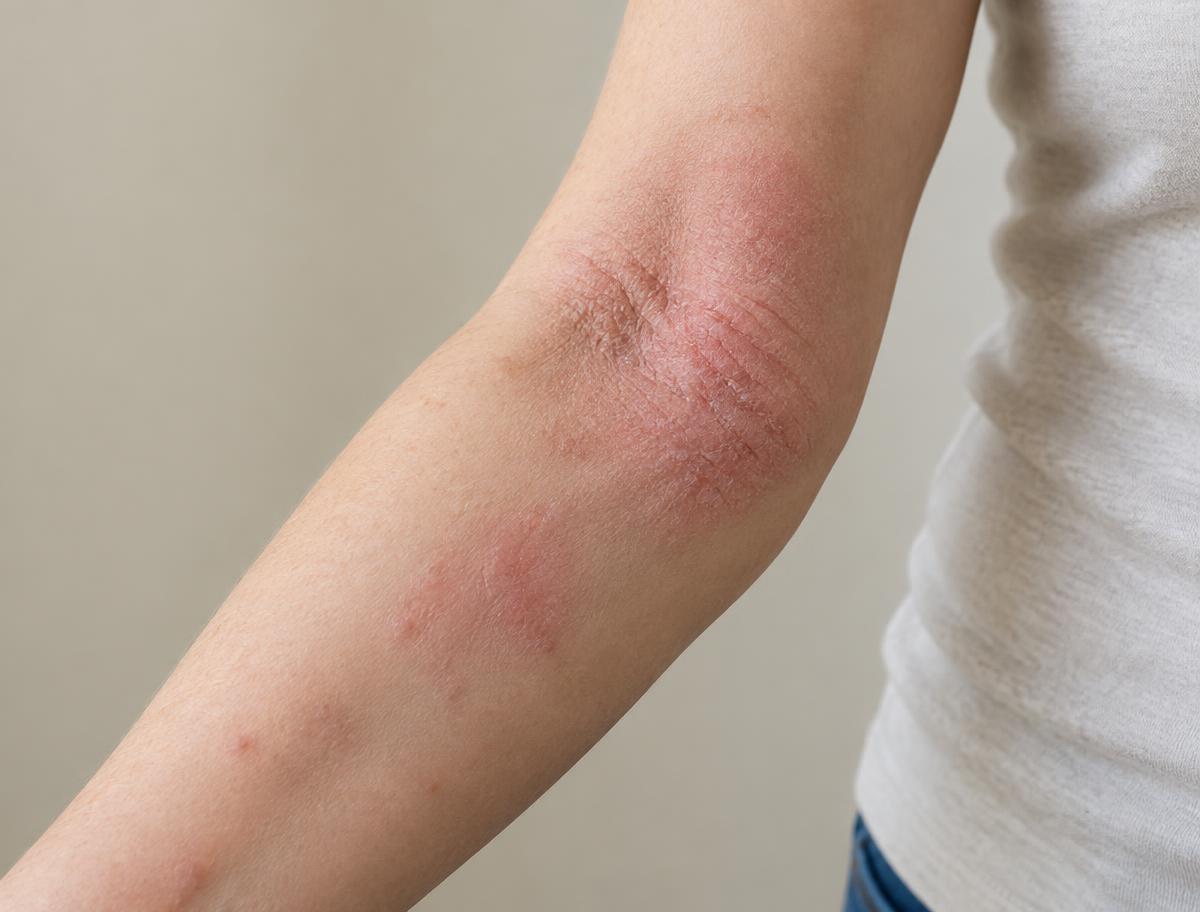
Eczema, also called atopic dermatitis, describes skin that is inflamed, itchy and prone to dryness and cracking. It often begins in childhood and can continue, change or return in adulthood, and it frequently occurs alongside seasonal allergies or asthma.
Skin affected by eczema has a weakened barrier, so moisture escapes and irritants get in more easily. That is why treatment rarely stops at a prescription cream: the daily routine matters as much as the medication.
Western South Dakota's low humidity, hard winters and wind make barrier repair particularly important here. A plan that works in a humid climate often needs adjusting for Rapid City.
Signs
What you might notice
- Itching, which often precedes any visible rash
- Dry, scaly or rough patches, commonly in elbow and knee creases, hands, eyelids or neck
- Redness or, on deeper skin tones, violet, grey or brown discoloration
- Weeping, crusting or cracking during flares
- Thickened, leathery skin in areas that have been scratched over time
- Sleep disruption from night-time itching
Care
How we treat it
Barrier repair. A specific bathing and moisturizing routine, thicker ointments in winter, and guidance on which cleansers and laundry products to avoid.
Topical anti-inflammatories. Topical steroids used at the right strength for the right site and duration, plus steroid-sparing options such as calcineurin inhibitors, PDE4 inhibitors and topical JAK inhibitors.
Systemic therapy. For moderate to severe eczema that topicals cannot control, biologic and oral systemic medications may be appropriate, including help navigating prior authorization.
Treating triggers and infection. Identifying contact allergens and irritants, and treating secondary bacterial or viral infection when it is present.
Itch control. Practical strategies for breaking the itch–scratch cycle, including night-time measures.
Evaluation
How it’s diagnosed
Eczema is diagnosed by examination and history: where the rash appears, how long it lasts, what worsens it, your personal and family history of eczema, asthma or allergies, and what you have used on the skin.
Because several conditions mimic eczema — contact dermatitis, psoriasis, fungal infection, and less commonly others — Dr. Gaul may recommend patch testing, a skin scraping or a small skin biopsy when the diagnosis is not clear-cut or the rash is not behaving as expected.
This page is general education and is not medical advice, diagnosis or treatment, and it does not create a physician–patient relationship. Individual circumstances differ; please discuss your own skin with a qualified clinician. If you are having a medical emergency, call 911.
Questions
Frequently asked
Eczema is a chronic condition that can be controlled very well, sometimes for long stretches, but it is not accurate to describe it as cured. The goal is skin that is comfortable and clear most of the time, with a plan for flares.
Food allergy plays a role in a minority of children with eczema and rarely drives adult eczema. Broad elimination diets often cause harm without helping the skin. We will discuss whether allergy evaluation makes sense in your case.
Used at the appropriate strength, site and duration, topical steroids are effective and safe. Problems generally come from using strong steroids on delicate skin for long periods without supervision. That is exactly what a plan is for.

Let’s take care of your skin.
Whether something has changed, something has been bothering you for years, or you simply want expert guidance on keeping your skin healthy, we’re here to help.