
Medical Dermatology
A rash deserves an actual diagnosis.
Hundreds of conditions can present as a rash. Careful evaluation — sometimes with a biopsy or patch testing — is what separates guessing from treating.
Overview
Understanding rashes
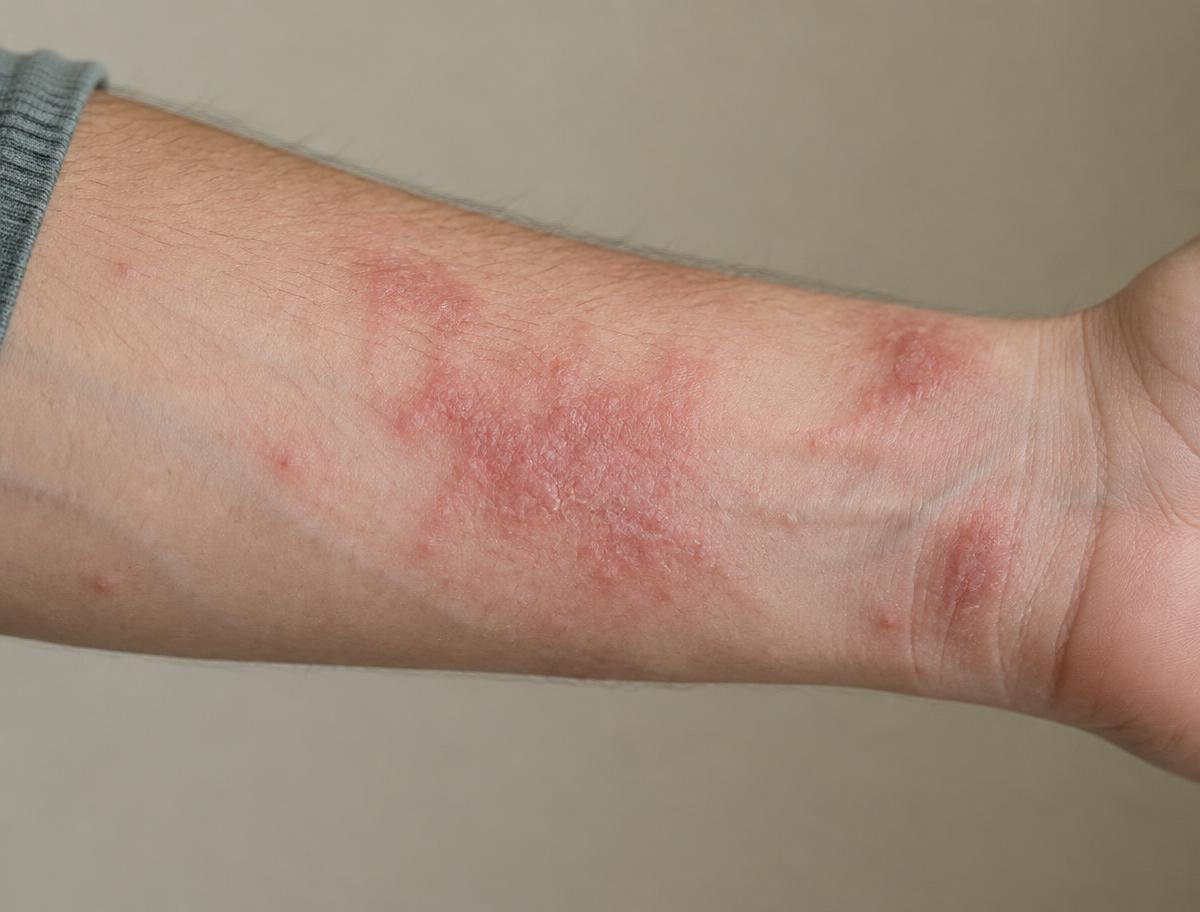
A rash is a finding, not a diagnosis. Contact allergy, irritation, infection, medication reaction, autoimmune disease and internal illness can all produce skin changes that look superficially similar.
Because the treatment for one cause can worsen another, it is worth identifying the cause before layering on creams. This is one of the most common reasons patients are referred to dermatology.
Rashes are scheduled as standalone appointments at our practice, because a thorough history, examination of the whole skin surface and a discussion of options cannot be squeezed onto the end of another visit.
Signs
What you might notice
- New bumps, patches, scaling or blistering anywhere on the body
- Itching, burning or pain in the affected skin
- Rash that appears after a new medication, product, plant or workplace exposure
- Rash that comes and goes, or moves
- Rash with fever, joint pain, mouth sores or feeling unwell
- Skin changes that are not healing or keep returning
Care
How we treat it
Treating the cause. Antifungal, antiviral or antibacterial therapy for infection; removal of a culprit product or medication; management of an underlying condition.
Topical anti-inflammatories. Prescription topicals matched to the site and severity of the rash.
Systemic therapy. Oral or injectable treatment for widespread, severe or immune-mediated rashes.
Symptom relief. Practical measures for itch, sleep and skin comfort while the underlying process is treated.
Evaluation
How it’s diagnosed
Evaluation begins with a detailed history — timing, spread, symptoms, exposures, medications, occupation, travel and prior treatment — and an examination of the skin, and often the scalp, nails and mouth.
Depending on the findings, Dr. Gaul may recommend a skin biopsy, a scraping or culture for fungus or bacteria, patch testing for contact allergens, or laboratory work. A biopsy is a brief in-office procedure using local anesthetic.
Biopsy results are typically available within 2 weeks. We will contact you with them.
Please come to your appointment without makeup or tinted sunscreen, and bring a list of medications, supplements and products you have applied to the skin.
This page is general education and is not medical advice, diagnosis or treatment, and it does not create a physician–patient relationship. Individual circumstances differ; please discuss your own skin with a qualified clinician. If you are having a medical emergency, call 911.
Questions
Frequently asked
Not reliably, and we do not diagnose by email or website message. Photographs are useful alongside an in-person examination, especially for a rash that comes and goes.
The site is numbed with local anesthetic first. Most patients feel the pinch of the injection and pressure afterward. It usually takes only a few minutes.
Both deserve real time. A skin cancer screening is a full-body examination, and a rash requires a separate history, exam and discussion. Scheduling them separately means neither is rushed.

Let’s take care of your skin.
Whether something has changed, something has been bothering you for years, or you simply want expert guidance on keeping your skin healthy, we’re here to help.